
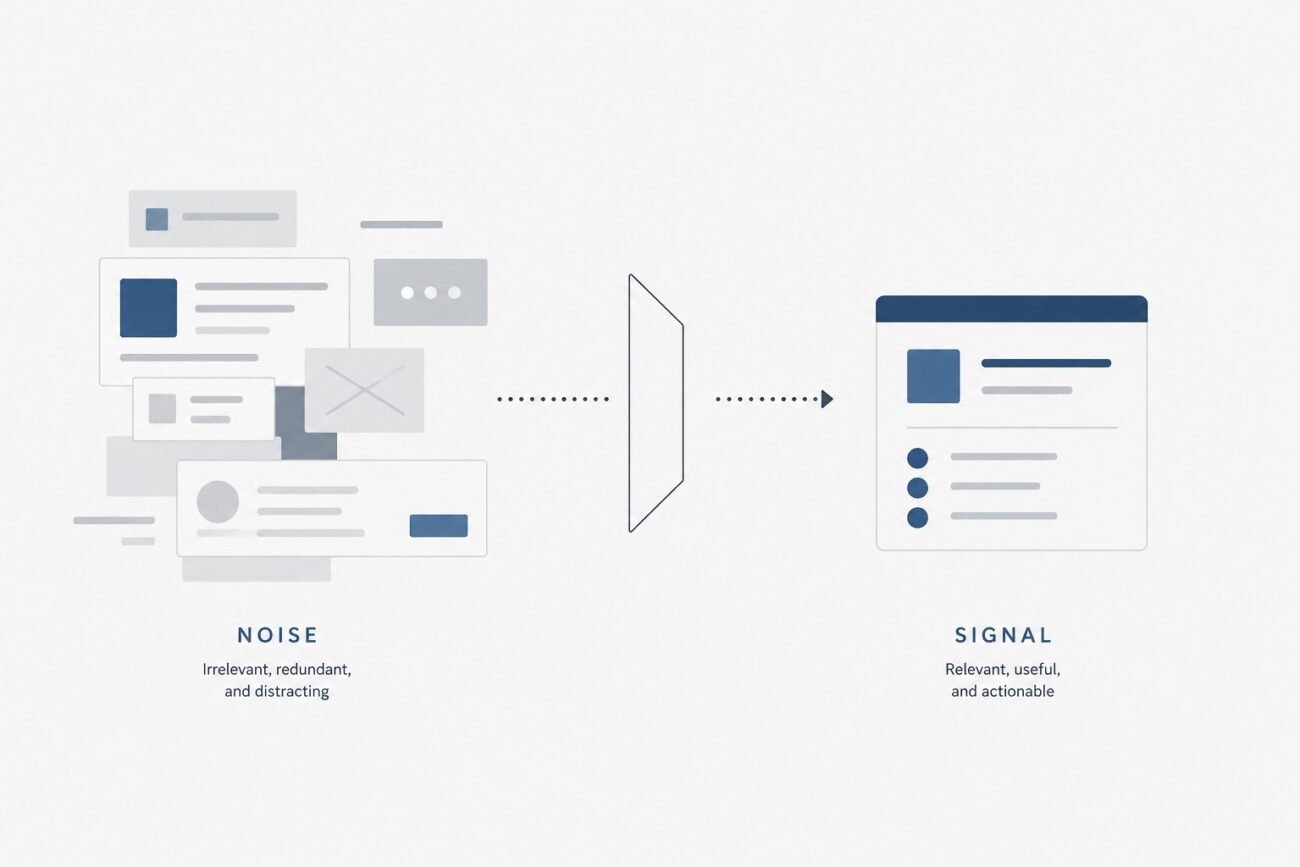
People don’t respond to what a system outputs — they respond to what they perceive. Every interface, alert, dashboard, and workflow produces a mix of signal and noise, and users spend more time filtering than acting. When the ratio tilts the wrong way, interpretation breaks long before the system does.
Signals are the elements that matter: clear states, meaningful changes, actionable information. Noise is everything that competes with those signals — clutter, ambiguity, unnecessary alerts, shifting labels, inconsistent patterns. Most systems generate both, but few are designed with the user’s filtering burden in mind.
As noise increases, users compensate. They skim. They guess. They ignore. They create personal shortcuts that drift away from the intended workflow. Eventually, the system feels unreliable not because it’s broken, but because the user can no longer distinguish what’s important from what’s merely present.
Designing for interpretation means designing for clarity. It means reducing the cognitive cost of understanding what the system is trying to say. And it means recognizing that the success of any tool depends less on the volume of information it provides and more on the quality of the signals it emits.
