
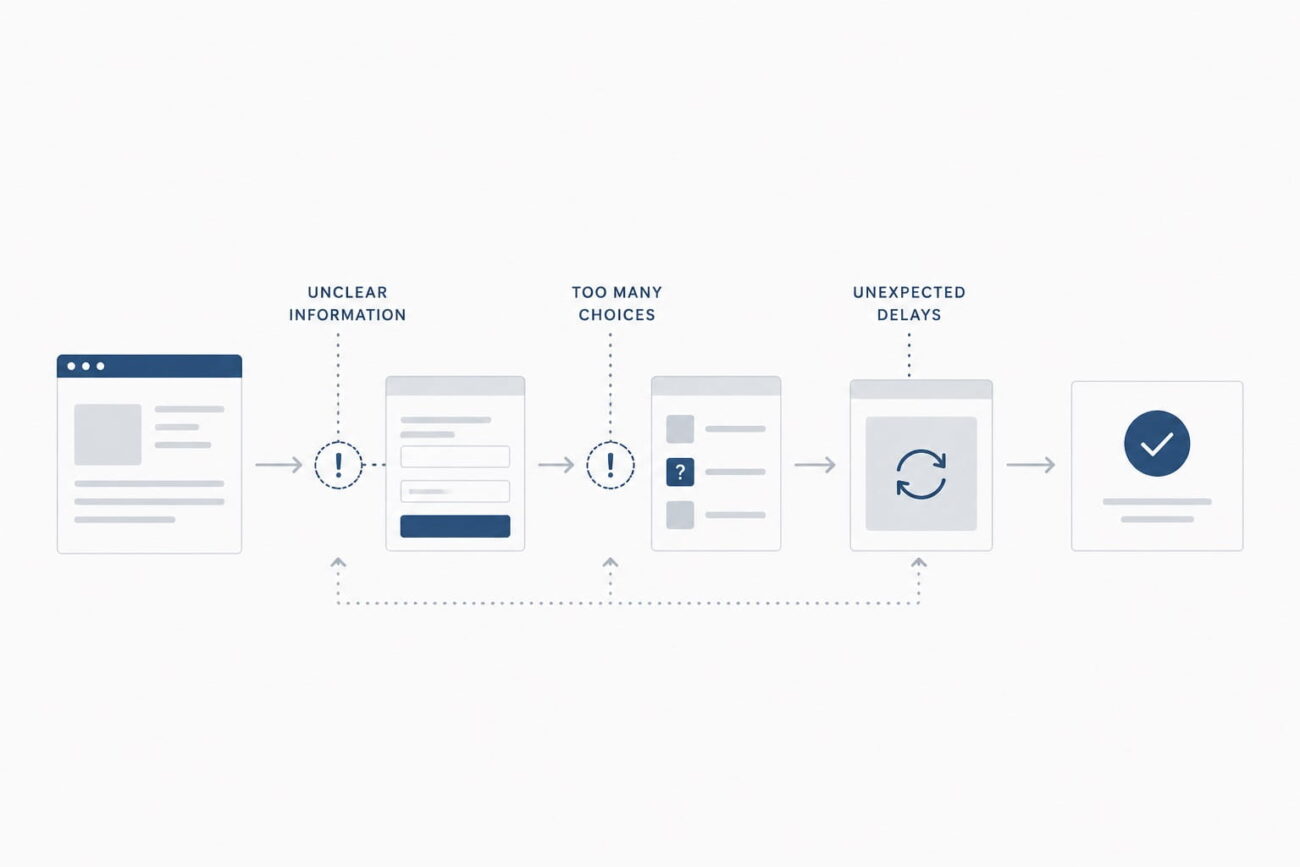
A clear, evergreen breakdown of how small points of friction — delays, unclear interfaces, cognitive overload, misaligned expectations — quietly shape user behavior at scale. Explains why friction is rarely about “speed” and almost always about interpretation, mental effort, and context switching. A foundational post for understanding why platforms fail or succeed in real‑world use.
Post 1 — Architecture of Digital Behavior
Post 6 — When Information Stops Being Useful
Post 11 — The Stability Principle
