
Blog Post 2: Edge vs. Cloud: Choosing the Right Architecture for Your Business
Introduction
In a world where data drives every decision, the age-old debate of edge vs. cloud computing is more relevant than ever. If you’re an IT leader, developer, or business owner grappling with latency issues, skyrocketing bandwidth costs, or the need for real-time insights, you’re not alone. As we explored in Edge Computing 101, edge computing brings processing power to the data’s source, revolutionizing industries like IoT and 5G. But how do you decide between edge, cloud, or a hybrid approach for your business IT architecture? In this second post of our Exploring Edge Computing in 2025 series, we’ll break it down with comparisons, pros/cons, and a practical decision framework to help you choose the right path forward.
Understanding Edge vs. Cloud: The Fundamentals
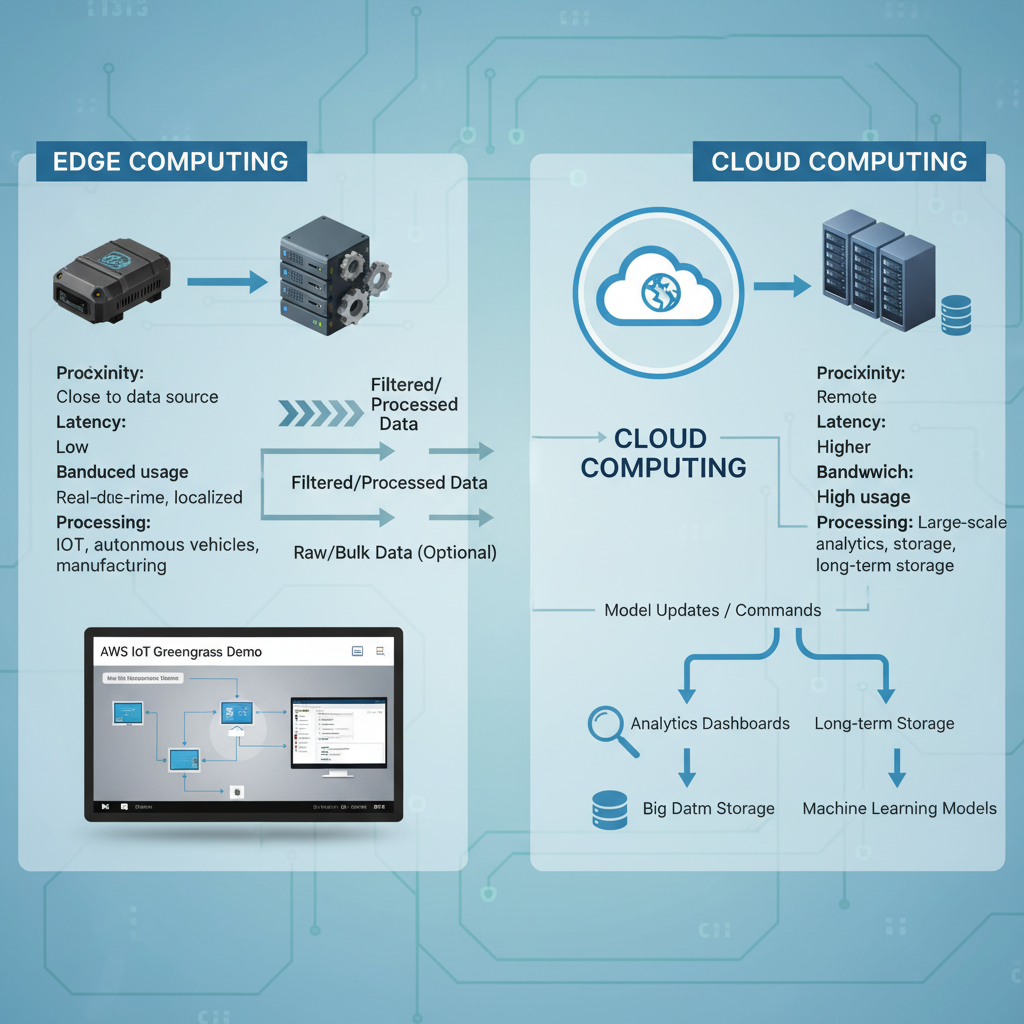
At its core, the edge vs. cloud debate boils down to where and how you process data.
- Cloud Computing: This centralized model relies on massive data centers (think AWS, Azure, or Google Cloud) to store, analyze, and manage data. Everything flows to the cloud for processing, making it ideal for scalable, resource-intensive tasks.
- Edge Computing: A decentralized approach that processes data locally—on devices, gateways, or nearby servers—at the “edge” of the network. It’s about speed over scale, handling tasks right where data is generated, like on a factory sensor or a retail kiosk.
In 2025, with IoT devices expected to hit 75 billion worldwide, neither model stands alone. Businesses must weigh factors like latency, cost, security, and scalability to build resilient IT architectures. Let’s dive into the pros and cons to see how they stack up.
Pros and Cons: A Head-to-Head Comparison
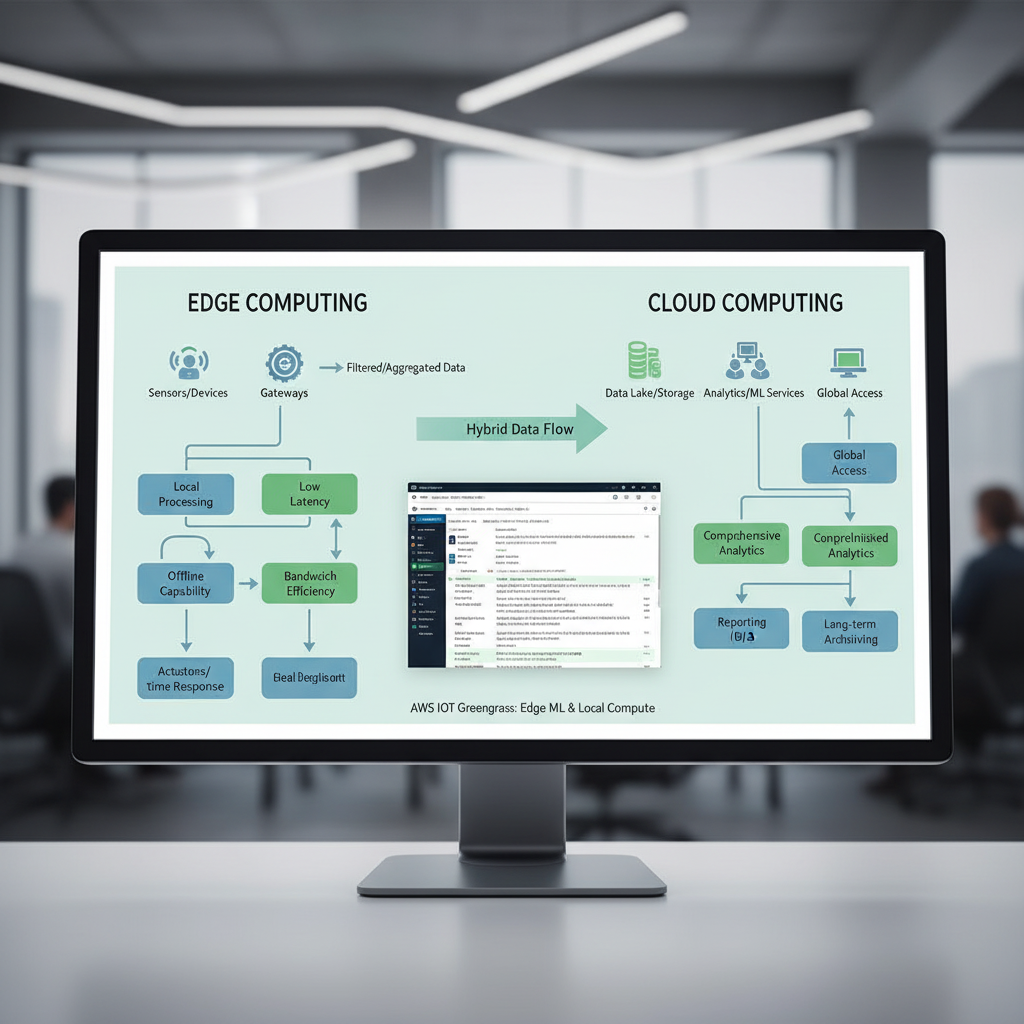
Choosing between edge and cloud isn’t black-and-white; it’s about matching the architecture to your needs. Here’s a balanced breakdown:
Edge Computing Pros:
- Ultra-Low Latency: Processes data in milliseconds, crucial for real-time apps like autonomous vehicles or AR experiences.
- Bandwidth Efficiency: Reduces data transfer to the cloud by 80-90% in some cases, slashing costs for high-volume IoT setups.
- Offline Resilience: Functions without constant internet, perfect for remote sites like oil rigs or disaster zones.
- Enhanced Privacy: Sensitive data stays local, minimizing exposure during transmission.
Edge Computing Cons:
- Limited Scalability: Edge devices have constrained power and storage, making complex AI or big data analytics challenging.
- Management Complexity: Deploying and updating thousands of edge nodes can be a logistical nightmare without robust tools.
- Higher Upfront Costs: Initial hardware investments (e.g., edge servers) can be steep for small businesses.
Cloud Computing Pros:
- Infinite Scalability: Easily handles massive workloads, from machine learning models to global data storage, with pay-as-you-go pricing.
- Centralized Control: Simplified management through dashboards, with built-in tools for security, backups, and analytics.
- Cost-Effective for Non-Real-Time Tasks: Ideal for batch processing or historical data analysis, where speed isn’t critical.
- Ecosystem Richness: Access to vast libraries of APIs, AI services, and integrations that accelerate development.
Cloud Computing Cons:
- Latency Bottlenecks: Data round-trips can add seconds of delay, disastrous for time-sensitive applications like telemedicine.
- Bandwidth Dependency: High data volumes strain networks, leading to costs that can balloon with 5G proliferation.
- Security Risks in Transit: More points of vulnerability when data travels over public networks.
- Downtime Exposure: Outages in a single cloud region can disrupt global operations.
The key takeaway? Edge excels in speed and locality, while cloud dominates in power and flexibility. For most modern businesses, the winner is often a hybrid computing model that leverages both.
When to Choose Edge, Cloud, or Hybrid for Your Business
Your choice depends on your industry’s demands, data volume, and strategic goals. Here’s a quick guide:
- Choose Edge Computing If…
- You need real-time processing (e.g., manufacturing sensors detecting faults instantly to prevent downtime).
- Bandwidth is limited or expensive (e.g., remote agriculture with satellite IoT).
- Privacy regulations are strict (e.g., GDPR in European healthcare, keeping patient data on-site).
- Example: A logistics company using edge-enabled drones for on-the-fly route optimization, reducing delivery times by 30%.
- Choose Cloud Computing If…
- Your workloads are compute-heavy but not urgent (e.g., e-commerce analytics for customer trends).
- You prioritize ease of scaling during peaks (e.g., retail during Black Friday surges).
- Collaboration across teams is key (e.g., global R&D sharing datasets).
- Example: A SaaS provider like Salesforce using cloud for AI-driven personalization, handling petabytes without local hardware hassles.
- Opt for Hybrid Computing If…
- You want the best of both worlds (e.g., edge for immediate actions, cloud for deeper insights). This is the 2025 sweet spot, with 70% of enterprises adopting hybrids per Gartner projections.
- Example: A smart city system where traffic cameras process footage at the edge for instant alerts, then sync anonymized data to the cloud for urban planning AI.
Hybrid setups often use orchestration tools like Kubernetes or AWS Outposts to seamlessly integrate edge and cloud, ensuring data flows intelligently.
Decision Framework: A Practical Matrix for Your IT Architecture
To make edge vs. cloud decisions actionable, use this simple matrix. Rate your needs on a scale of 1-5 (1 = low priority, 5 = high) and see where your business lands:
| Factor | Edge Score (If High) | Cloud Score (If High) | Hybrid Recommendation |
|---|---|---|---|
| Latency Needs | 5 (Real-time critical) | 1 (Batch OK) | Edge for front-end, cloud for back-end. |
| Data Volume | 2 (Low, local) | 5 (Massive, scalable) | Edge filters data before cloud upload. |
| Scalability | 2 (Device-limited) | 5 (Elastic resources) | Cloud core with edge extensions. |
| Cost Sensitivity | 4 (Bandwidth savings) | 3 (Pay-per-use) | Hybrid to optimize both. |
| Security/Privacy | 5 (Local control) | 3 (Centralized tools) | Edge for sensitive data, cloud for aggregates. |
| Internet Reliability | 5 (Offline capable) | 1 (Always connected) | Edge as failover for cloud. |
Total your scores: If edge factors dominate, lean edge-heavy. Cloud-heavy? Go centralized. Balanced? Hybrid is your architecture. Tools like this can guide RFPs or pilot projects—test with a small-scale deployment to validate.
Real-World Success: Businesses Getting It Right
Companies are already reaping rewards from smart edge vs. cloud choices:
- General Electric (GE): Uses hybrid edge-cloud for predictive maintenance in wind turbines—edge sensors detect issues in real-time, cloud analyzes patterns to cut failures by 20%.
- Walmart: Deploys edge computing in stores for inventory tracking via RFID, syncing to cloud for supply chain forecasts, boosting efficiency amid 2025’s e-commerce boom.
- John Deere: Edge-enabled tractors process soil data on-site for precision farming, with cloud integration for weather-integrated yield predictions.
These cases show that the right architecture isn’t just tech—it’s a competitive edge driving ROI.
Conclusion: Build Your Future-Proof IT Strategy
In the edge vs. cloud showdown, there’s no one-size-fits-all winner; it’s about aligning with your business goals in a 2025 landscape of exploding data and connectivity. Whether you go full edge for speed, cloud for scale, or hybrid for versatility, the key is starting with a clear assessment.
Ready to implement? Share your edge vs. cloud dilemmas in the comments—we’d love to hear how you’re navigating this! In our next post, Edge Computing in Action: Real-World Use Cases and Success Stories, we’ll spotlight more inspiring examples to fuel your strategy. Subscribe for updates and download our free edge computing checklist [Insert Download Link] to kickstart your evaluation.
What architecture are you leaning toward, and why? Let’s discuss!
Tags: edge vs cloud, hybrid computing, business IT architecture, edge computing benefits
